
- This event has passed.
Learn to Sew Reusable Cloth Pads for Menstruation and Incontinence @ STL
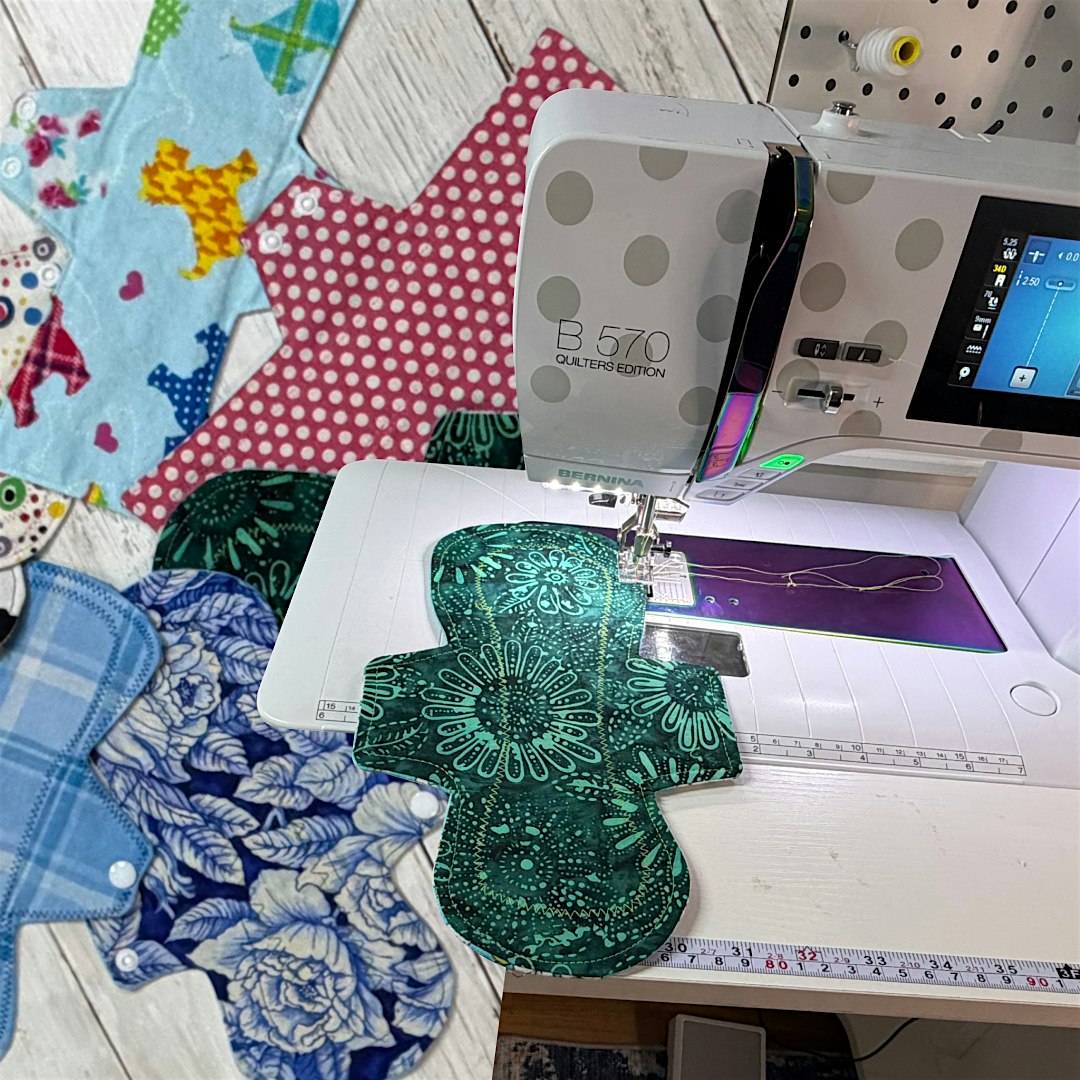
Students will learn to sew reusable cloth pads for menstruation and/or incontinence using a selection of easy-to-find fabrics, and quickly learn how the world of cloth pads is ahead of commercial pads in terms of customizations and leak protection. The benefits of cloth pads are endless.
This project will help you grow existing sewing skills and confidence (details on prerequisites below). They provide reduced skin irritation, increased comfort, total control over the materials (no plastic), better breathability, customized absorption and leak protection, save plastic from landfills, and provide cost savings over time. Cloth pads make great gifts and donations to charities as well.
This class will cover questions such as:
- Are reusable cloth pads sanitary?
- Are they more prone to leaks than disposable options?
- How fast do they absorb?
- How do I wash them?
- What about stains?
- What about super-heavy flows?
Students will get an overview of the different layers in cloth pads and recommendations for best options based on needs, be provided with enough supplies to make at least two reusable pads from the available patterns, learn and get support for the entire process, and be provided a list of recommended materials (where to find them and how to select the right ones while also offering options for a range of budgets).
This class will be taught in an inclusive, judgment-free environment. There will be direct language around sensitive topics, like anatomy, menstruation, and other aspects of being human.
Prerequisites: This class is for students who have basic experience using a sewing machine. All students must already be able to thread a machine and bobbin without guidance, be able to sew straight seams, understand basic seam allowance, backstitching, and simple construction, and have completed simple projects using a sewing machine.
About the instructor, Kimberly Swenson: Kimberly has been sewing for 30+ years. It all started when her mother gave her a threaded needle and some scrap fabric when she was six years old; Kimberly would sit in the corner at her work, mesmerized by how thread could combine two pieces of fabric. She learned how to sew on a machine when she was eight, then learned the “right” way to sew in Home Economics. Since then, she’s sewn everything from handbags, quilts, a wedding dress, garments, and accessories. She loves the creative problem-solving in sewing and the satisfaction of figuring out a challenging project.
Our sliding scale for classes helps to reduce barriers for participation while retaining sufficient income for Seattle REconomy, which owns and operates the NE Seattle and Shoreline tool libraries. Please choose the level that best fits your family’s income. If cost is a concern, we encourage you to contact us at info@seattlereconomy.org to discuss options.
ACCESSIBILITY:
- The venue is wheelchair accessible and has an all-gender restroom. The restroom is ADA compliant.
- Non-English and ASL interpreters are not provided at our classes and events, however attendees are welcome to bring their own interpreters.
- Please contact us with any accessibility notes or requests.
GETTING THERE:
- By transit: Served by King County Metro bus Rapid Ride E Line on Aurora Ave N and N 165th.
- By bike: The venue is located one block west of the Interurban Trail. Shoreline Light Rail stations are each about 2 miles away. A bicycle rack is available outside the building.
- Car parking: There is an asphalt parking lot that fits up to 20 cars. There is one ADA van accessible parking space with an access aisle.
Children are welcome at some classes with their parent or guardian on a case-by-case basis, either as a student or as an observer. If you would like your child to attend a class with you, please email info@seattlereconomy.org with their age and experience. Let us know if they will be a student or an observer, the name and date of the class, and we will determine if it is appropriate.